Most startups operate in a very competitive environment where speed, innovation, and scalability are key factors for survival.
Many startups start with small groups doing software writing, launching, cloud infrastructure, testing, and monitoring simultaneously. As the business grows, these tasks become a major challenge without effective systems and automation.
At such a juncture, DevOps consulting is very useful. They assist software delivery, automate infrastructure, reduce downtime, improve security, and make cloud environments more efficient. Startups can count on automated systems in place of manual deployment methods and separate workflows, which are not good for fast and reliable growth.
The year 2026 will see DevOps consulting also get a boost from artificial intelligence. We are seeing more and more companies turning to AI-driven DevOps to enhance failure prediction, automation of monitoring, security detection, and infrastructure cost optimization. Startups implementing contemporary DevOps approaches are giving themselves a very solid competitive edge as they can be quicker at product roll-out and still keep the systems stable.
This tutorial highlights the importance of DevOps consulting services for startups, the most popular ones, and the best way for startups to select a suitable DevOps partner.
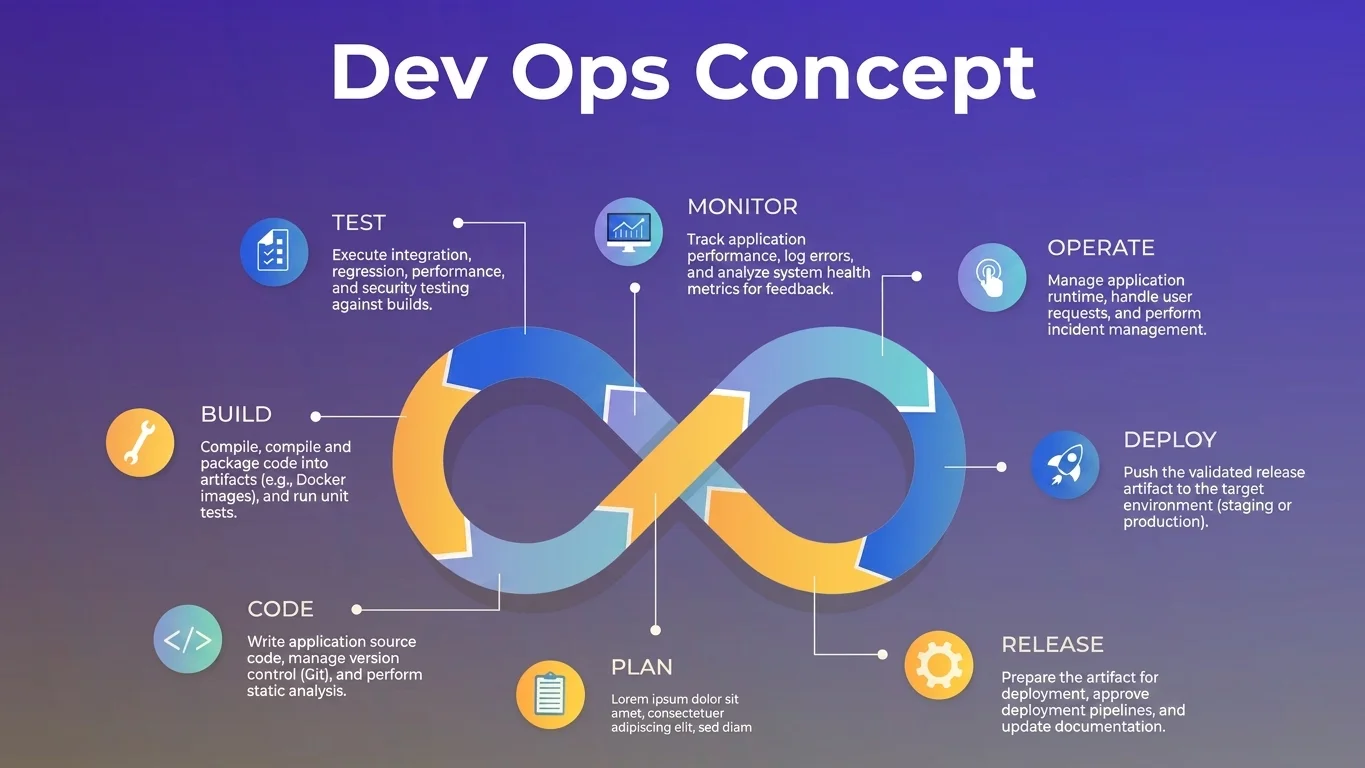
DevOps consultancy consists of consulting channeled towards bridging the gap between development and operations teams. At the beginning, developers were the only ones responsible for application development, while operations teams were the ones that managed the infrastructure. Such separation led to misunderstandings and late deployments, among others.DevOps was introduced to overcome such a dilemma by means of creating automated workflows that link development, testing, deployment, monitoring, and management of the environment into one ongoing process. DevOps consultants support startups to adopt these workflows through the use of cloud, automation, monitoring, and security tools.
Besides this, a DevOps consulting team can also assist you with cloud architecture, CI/CD pipelines, Infrastructure as Code, Kubernetes management, security automation, monitoring systems, and performance optimization. The ultimate aim will be to help startups put up reliable and scalable systems, which are a strong support for fast growth.
Startups have to struggle a lot with the pressures from their customers who would like to see new products and new features at the shortest possible time. When a human is the one controlling the deployment process, things get complicated very fast, and the chances of failure increase. DevOps solutions are therefore introduced to achieve automation so as to have several deployments/releases in a much shorter period of time, and at the same time, be able to reduce the level of errors.
Besides that, startups are usually very challenged when it comes to managing their infrastructure. Although cloud services are always available and can be customized according to the needs of the company, bad handling of the cloud can dramatically increase operational costs. DevOps consultants work with you on how best you can optimize the infrastructure by improving resource usage, automating processes, and cutting down on unnecessary cloud spending.
The issue of security is becoming quite a big problem for growing startups as well. If security is not seen as a priority, data leaks, compliance violations, and loss of brand reputation are just some of the consequences. Traditional DevOps consulting services bring together security and development workflows using DevSecOps methodologies. This enables startups to discover security holes earlier and also raises the protection level.
Yet another factor that justifies why startups would go after consulting services from DevOps is the aspect of scalability. When the user base and traffic are on the rise, then applications require infrastructure capable of scaling up on demand efficiently and without downtime. DevOps professionals are crafting scalable architectures employing containers, Kubernetes orchestration, load balancing, and auto scaling systems.
Cloud experience is one of the top things that characterize a great DevOps consulting company. Today’s startups are almost entirely dependent on cloud platforms such as AWS, Microsoft Azure, and Google Cloud. A DevOps consultant is a person who helps a startup design a scalable cloud infrastructure that can support increased demand in the future.
Continuous Integration and Continuous Deployment are pretty much the backbone of DevOps consulting. Software testing and deployment processes are done through CI/CD pipelines. Instead of deploying manually, a team can test and update automatically every time new code gets into the repository. As a result, development speed and reliability can be highly enhanced.
Using containers and Kubernetes orchestration are just a few modern software development technologies. Containers help in making the applications portable and easy to manage in different environments. Kubernetes is a tool used for automation of scaling, deployment, and container management. So, a DevOps consultant should be able to help a startup in these aspects.
Monitoring and observability play a crucial role. Startups need to be able to see application performance, infrastructure health, and operational issues. With the help of a modern monitoring platform, the team will be shown not only the real-time situation through insights but also be able to receive alerting systems that help them pinpoint and tackle problems quickly.
Another thing that a DevOps consulting service can help with is security automation. Rather than doing security as an afterthought, DevSecOps architecture integrates security in all stages of the software development lifecycle. This helps startups ensure a good level of security while also staying agile in the development process.
The role of artificial intelligence (AI) in DevOps is so impactful that it has changed the way operations have been working in the software industry. Through AI-powered features, large sets of operational data can be analyzed to detect patterns that humans might miss. In this way, startups can work on improving their operations while also reducing downtime and automating tasks that would otherwise take even complex ones.
Failure prediction through AI-driven monitoring is a major step towards the future of IT. Instead of dealing with problems and outages when they occur, the team will be one step ahead in solving the problems. With this, end-user experience and system reliability are bound to improve.
Another way AI can be of great help in incident management is by quickly identifying causes when problems arise. One of the weaknesses of traditional monitoring tools is that they can generate many alerts, and this can lead to problems being overlooked, as engineers tend to just look at them as noise. The good news is that AI-powered observability platforms help in combating analyst fatigue as they can identify critical incidents and prioritize them so that engineers need only focus on the most important issues.
AI also has the power to make operations such as cloud usage and cloud services, etc., more efficient and less costly (especially when doing so with limited budgets). This is because with the help of AI, it is possible to analyze how the infrastructure is used and what the best ways are to reduce the costs as well as maintain the performance. Hence, AI-based solutions help startups take advantage of cloud optimization.
For any startup, finding the perfect DevOps consulting firm can be a challenge. First of all, one needs to know what the company’s technical capability is all about. As” an excellent DevOps consulting company should have knowledge in almost all disciplines: cloud infrastructure, Kubernetes, automation tools, monitoring systems, security practices, etc.
Another thing that you should consider when hiring someone is whether or not the consultants have experience in the world of startups. While it is true that startups are fast-moving and require flexible infrastructures most of the time, a consulting firm that has worked with startups would be able to come up with a solution that not only meets those changing requirements but also embraces budgeting and scaling challenges.
You should be very careful about the quality of communication. The consultant might have a lot of knowledge and expertise, but if they cannot explain complex concepts to you in a simple language and if they cannot also keep you updated about the progress on a regular basis, then the communication is not good. However, when you have good communication, it becomes very easy to prevent confusion, and it also helps with staying aligned during implementation.
If a startup has a look at the consultant's case studies and past projects, this might even help them understand better the consultant’s capabilities in the real world. It is recommended that startups focus on such examples that involve cloud migration, automation, Kubernetes implementation, and monitoring systems.
Many startups don't consider automation until operational issues are quite serious. Waiting for this approach often causes technical debts and makes future infrastructure even more complex. Automation, early on, however, is a great way to help with long-term scalability.
Ignoring monitoring and observability is yet another common mistake. Without the right monitoring in place, it becomes difficult for the teams to find out where the performance problems and infrastructure failures are, at least fast enough.
Overcomplicating infrastructure causes quite a few problems as well. For instance, some startups choose technologies that are not essential to them at that moment simply because these tech are "in". The design of infrastructure should be based on what the business actually needs rather than being merely influenced by the latest trends.
Poor documentation often leads to operational confusion, too. Good documentation makes teams work better together, helps new team members get up to speed, and also lessens reliance on certain individuals.
DevOps consulting will undoubtedly evolve over the years along with AI automation, platform engineering, and cloud-native technologies. Less and less manual operations are done currently by large engineering teams, mainly due to AI-driven operations becoming smarter and more capable.
Systems that heal themselves, infrastructure management without human intervention, use of predictive analytics, and observability platforms integrated with AI will likely be regular sights in DevOps environments alongside the startup advantages of scalability, efficiency, and operational reliability.
Cloud-native infrastructure is the very backbone of modern application development as it allows you to have flexibility, automation, and scalability side by side. In a sense, we can say that Kubernetes, serverless computing, and AI-powered observability are going to be the only three that matter in tech in the coming few years. Making use of disruption.
In recent years, software development has seen major changes. Companies that operate in today's world expect frequent releases, infrastructure that they can rely on, security measures, and continuous updates. While traditional DevOps pipelines already incorporate numerous automated processes within development, artificial intelligence is leading the transition to completely new levels of automation in DevOps.
Using machine learning, smart systems for monitoring, forecast analytics, and automated scheduling, AI-operated DevOps pipelines bring about several benefits, including safe applications, fewer problems, work processes virtualization, and faster deployments.
Besides just executing operations on the predetermined scripts and hand-operated decisions, AI-enabled DevOps systems incessantly study the data and proffer smart suggestions. As a result, more accurate infrastructure management, efficient monitoring, and higher quality deployments will all be realized.
The steps laid out in this article will assist you in constructing an AI-driven DevOps pipeline in a straightforward and readable manner.
Essentially, an AI-driven DevOps pipeline is a software delivery process that mixes DevOps automation with artificial intelligence elements. While traditional pipelines have automated activities such as testing, deployment, and infrastructure provisioning, the role of AI-powered pipelines is further enhanced with intelligent decision-making and predictive analytics.
These systems may be able to predict failures, detect anomalies, optimize cloud resources, assess deployment risks, and handle incident response automatically.
Additionally, AI-driven pipelines are highly beneficial in improving operational efficiency as they are capable of not only reducing repetitive manual labor but also enhancing the correctness of the infrastructure decisions.
Managing large-scale cloud applications and fast software release cycles are becoming paramount reasons for companies to orient toward AI-driven DevOps pipelines.
The main reason for businesses to embrace AI-driven DevOps is that the landscape of modern software delivery is highly intricate. An application in the current scenario comprises cloud infrastructure, containers, microservices, security monitoring, and continuous deployment processes.
Without the help of AI-powered automation, businesses cannot in any way meet the performance required while maintaining deployment speed, reliability, and security.
AI also improves monitoring by identifying patterns and anomalies in infrastructure behavior. Instead of reacting to problems after failures occur, teams can proactively address issues earlier.
Another important benefit is cloud cost optimization. AI systems analyze infrastructure usage and recommend ways to reduce operational expenses without affecting performance.
Picking a trustworthy cloud platform is the first thing to do when establishing an AI-driven DevOps pipeline. Most contemporary DevOps architectures rely on cloud providers such as AWS, Microsoft Azure, or Google Cloud Platform, as these platforms provide resources for scalability, automation, and flexible infrastructure.
Once you have chosen the cloud platform, the next step is to start using Infrastructure as Code. With Infrastructure as Code, engineers control servers, networks, databases, and other cloud components through configuration files rather than manual installation methods.
Utilizing this method offers better consistency, lessening human operational errors. Moreover, it facilitates the scaling and management of infrastructures.
Version control systems are a critical component of the pipeline base. Repositories based on Git enable developers to keep track of changes to code and foster collaborations among different teams.
Continuous Integration is a core component of the DevOps workflow. CI tools automatically carry out the building and testing of software applications as soon as there is a commit by the developers. Thanks to this work, the team can spot bugs and issues related to compatibility at an early stage. Problems are no longer deferred to deployment only, as they can be detected at integration time.
The role of AI in CI includes doing a forensic analysis of past build operations and noticing failure trends. AI can also be used to gauge what parts to test first based on the risk level of code and even estimate which changes are more liable to fail after deployment.
Hence, the workflow is made both smarter and more productive.
It is through tests that you can ensure that the software is of high quality. The traditional approach to testing may be time-consuming and demand a lot of effort.
Testing platforms using AI help boost productivity in creating test cases automatically, signaling potentially defective code changes, and decoding test run errors. These tools adopt a learning-by-experience approach; that is, by using historical test datasets.
In addition, AI can be applied to testing in order to cut down the number of tests that need to be run by zeroing in on the parts of the application that most probably have defects. Doing so results in shorter testing times and quicker introduction to the market.
For software startups and companies experiencing rapid growth, automated testing is a must-have because it enables the swift release of new products at a high level of quality.
Containerization is a key element of today’s DevOps pipelines. By putting together an application and its needed libraries in one unit called a container, you make sure that the deployment behaves the same way across different environments.
Among the various container technologies available, Docker is one of the most popular ones. Thanks to containers, deployments are greatly simplified, and the whole process of moving from one cloud platform to another is much easier.
On the other hand, Kubernetes steps in to take care of and run containers in large quantities. It deals by itself with tasks such as deployment, scaling, balancing loads, and recovering from failures.
The use of AI-enabled systems can be quite an upgrade for Kubernetes setups as these powerful tools forecast the need for resources, pinpoint problems in the infrastructure, and tweak how work is shared.
With this, companies are able to hold on to their infrastructures, which are not only stable but also scalable, even when the demand shoots up during high traffic times.
Continuous Deployment is where automation comes in for the release operation of the software updates in production settings. Simply put, the pipeline manages the deployment task automatically after the tests have been run to completion successfully, rather than having to deploy code manually.
Before making a release, AI-supported deployment platforms carry out an assessment of the deployment risks. If the system notices an aberrant behavior or a potential issue, it can automatically pause the deployment.
So, this helps in lowering the risk by operating with automatic backup, and, in turn, the safety of the software is enhanced.
Another advantage of Continuous Deployment is that it enables companies to get features to the market faster, thus providing more ground for competition and raising the level of satisfaction for customers.
Monitoring and observability play a critical role in keeping production systems healthy. Nowadays, applications are producing massive amounts of infrastructure and application data.
Older monitoring solutions usually result in alert fatigue and overload, thus making it quite a feat for engineers to locate critical issues. AI-fueled observability platforms, however, work out the problem by analyzing patterns and focusing on the highest priority incidents.
AI systems are good at identifying anomalies, forecasting failures, doing root cause analysis automatically, and giving ideas for solutions. All this results in better operational efficiency and less downtime.
Observability is rich in giving data on how an application works, how users behave, and how efficiently the infrastructure is being used.
Instead of having security as a separate panel, it has to be added at every phase of a DevOps pipeline. The name of this technique is DevSecOps.
Security systems powered by AI keep scanning applications, third-party libraries, and infrastructure for vulnerabilities. They detect irregularities in behavior, figure out security risks, and do compliance monitoring without any manual intervention.
Security being a part of a pipeline lessens the chance of a vulnerability making it to a production environment.
Keeping up with the pace of technology, changing landscapes, and evolving attacks, modern enterprises should consider security as a continuous operation instead of a last testing phase.
AI analytics enable enterprises to enhance infrastructure performance and operational efficiency continually.
AI analyzes how often the deployments happen, the usage of infrastructure, failure rates, the performance of applications, and operational costs. Based on this study, they suggest the execution of optimizations that help the system grow and save costs.
Besides, predictive analytics enable the engineering team to effectively map the infrastructure scaling process. Rather than waiting for the performance to decline and then reacting, the company can provision the infrastructure ahead of time.
That gives rise to more stable and cost-efficient cloud environments.
Creating a pipeline of DevOps powered by AI is no bed of roses, especially if the organization has an old infrastructure and little automation knowledge.
One of the issues that gets thrown up all the time is that different tools and platforms have to be put together. DevOps in the present day often involves many technologies, which, without proper configuration, might not even work together.
Data quality issues are yet another problem because AI systems rely on accurate operational data to a great extent. Lack of monitoring or inconsistent logging will make the AI less effective.
A shortage of skills might be a further hurdle. People need to be trained in cloud technology, automation systems, Kubernetes, monitoring tools, and operations with AI.
Besides all these hurdles, intelligent automation’s advantages over time usually outweigh the initial complexity.
The future of DevOps looks away from manual and towards autonomy. AI-powered systems are expected to lead the way into self-healing infrastructures, intelligent deployments, predictive operations, and automated optimization.
There is the possibility that future DevOps environments will require very little human operational management as AI systems automatically take care of monitoring, scaling, incident detection, and infrastructure optimization.
Major components of modern software engineering will likely be AI-generated Infrastructure as Code, autonomous cloud management, and intelligent observability platforms.
Organizations that embrace AI-powered DevOps in their strategies will have longer-term winners in terms of scalability, speed, and operational efficiency.
Nowadays, most companies rely on software applications, cloud infrastructure, and digital services to help them operate and serve customers. As a result, businesses need to deploy updates faster, keep systems running smoothly, safeguard customer data, and efficiently scale their infrastructure.
Old-fashioned development and operations methods are often too slow and uncoordinated to satisfy the higher demands. Developers might concentrate solely on coding while operations teams manage deployment and infrastructure without much interaction. Such a division leads to communication issues, deployment holdups, inefficiencies in operations, and increased security vulnerabilities.
By merging development and operations into a single automated process, DevOps automation services get rid of the problems mentioned above. Automation enhances teamwork, speeds up software delivery, lessens human errors, and raises the dependability of infrastructure.
DevOps automation is undoubtedly going to be a vital area of expenditure for most companies by 2026. They are obtaining and utilizing AI-based automation, Kubernetes orchestration, cloud-native infrastructure, observability systems, and DevSecOps tactics for boosting operational performance.
Here, this manual clarifies what DevOps automation services are and why they matter for companies wanting to elevate their software delivery operations and thereby grow.
Simply put, such services seek to automate software design, testing, deployment, infrastructure management, monitoring, and security.
Rather than executing these operations by human hands, businesses implement automation tools to establish operational systems that are quicker and more dependable.
This also plays a role in bettering consistency, as tasks done repeatedly become part of workflows that have been drafted beforehand, thereby lessening the necessity for manual intervention. The result is fewer mistakes made during operations and higher quality outputs from software development efforts.
The majority of the latest DevOps automation services come with a set of features including Continuous Integration, Continuous Deployment, Infrastructure as Code, container orchestration, monitoring systems, security automation, and cloud optimization.
Together, these services equip businesses to make gains in efficiency, all the while reducing operational complexity.
The main driver for a lot of companies that proceed with DevOps automation is getting their software delivered faster. Users nowadays are constantly demanding enhanced performance of the product and additional features on a regular basis.
When release cycles are stretched, not only do clients get frustrated due to delays, but the manual deployment process itself can be prone to errors, leading to failures in operations.
On the other hand, automation is capable of not just speeding up but also stabilizing the entire software release process.
One other great benefit of automation is that it can massively minimize mistakes caused by humans. Infrastructure setup and deployment executed manually tend to give rise to inconsistencies, due to which systems go down or, even worse, are left vulnerable to attacks.
Automated systems, by virtue of sticking to pre-agreed procedures, present themselves as a lower risk to operations and have a greater potential to provide continuous and stable service.
Improving collaboration between software developers and operations staff is among the many additional benefits that come with DevOps automation. Common workflows and automated activities help lessen communication barriers and ultimately enhance work output.
Continuous Integration and Continuous Deployment constitute the backbone of DevOps automation.
With Continuous Integration, the system is set to trigger a build and run test cases on the codebase right the moment the developer pushes the changes. Apart from this, changes get integrated faster, reducing the overall number of conflicts in merging the codebase later.
Continuous Deployment refers to automatically deploying a new version of software into production as soon as it passes the testing pipeline without waiting for manual intervention or approval.
CI/CD automation thereby makes the software cycle quicker, risks involved in deployment are lesser, and lets businesses release their features more often.
Today, automating CI/CD pipelines has become a necessity for modern companies that continually deploy their software.
Managing cloud infrastructure manually is often a challenging task. Companies running extensive cloud networks must rely on infrastructure management that is both scalable and consistent.
Thankfully, Infrastructure as Code allows developers to handle infrastructure through configuration files.
Furthermore, such an infrastructural layout increases the level of trustworthiness since Infrastructure can be replicated similarly across different environments.
Additionally, the automation of cloud services allows for adjustments of resources to meet the needs of the users continuously. Instead of a human being deliberately carrying out the expansion of the server storage capacity, the automated system can react instantly and appropriately to the increase in the number of visitors as well as different tasks.
That is how scalability and operational efficiency are increased.
Containerization is a part of the ecosystem of modern software delivery that most people are not even aware of.
By packaging an application and all its related files together, containers ensure that deployments are more portable and consistent.
Due to Docker's nature of simplification, it has become the most popular way of containerizing applications, enabling Anybody to be able to deploy applications easily in an environment different from their own.
Then Kubernetes orchestrates container management on a large scale. Furthermore, it carries out scaling, load balancing, deployment, and recovery processes, etc. automatically.
It is not surprising that companies that have adopted Kubernetes have achieved better scalability and infrastructure reliability.
DevOps automation services typically cover the implementation of Kubernetes because modern cloud-native applications are heavily dependent on container orchestration.
Modern DevOps Must Rely on Monitoring and Observability
Monitoring and observability are two sides of the same coin. Both are indispensable for keeping production systems operating smoothly.
Modern-day apps generate colossal traffic data that comes from both their infrastructure and operations. Without effective monitoring tools in place, companies could find it hard to address performance issues and outages promptly.
Observability solutions offer near real-time visibility into the health of your infrastructure, the performance of your apps, and changes in your operations.
AI-enabled monitoring platforms further enhance observability by highlighting unusual patterns, forecasting incidents, and simplifying incident analysis through automation.
This leads to reduced downtime as well as better customer experiences.
Nowadays, security has become one of the critical components for modern software development.
After a very long time, security concerns have been generally seen from the outside of the box and considered as subsequent to development, which results in higher exposure to vulnerabilities and finally poor security in production environments.
DevSecOps is the practice of embedding security checks and controls within the DevOps processes themselves.
Tools that automate security measures are perpetually checking infrastructures, dependencies, applications, and containers for weaknesses. They also aid in the automation of compliance monitoring as well as threat detection.
Following DevSecOps methods not only speeds up development but also greatly improves security.
One of the most significant revolutions in DevOps automation is being driven by artificial intelligence.
AI-driven systems keep monitoring operational data and find hidden trends even in large data sets that may go unnoticed.
Predictive analytics enable a business to discover potential issues with its infrastructure ahead of time so that the required corrective action can be taken. This enhances the robustness of the system and also minimizes the time when the application is not available to users.
Also, AI-powered monitoring systems disregard noisy alerts and thereby mitigate the problem of alert fatigue by focusing the attention of operators on the most critical problems
A further significant advantage arising from the incorporation of AI into DevOps automation concerns cloud optimization. It involves the use of AI programs that simulate different resource utilization scenarios in data centers, and after the analysis is concluded, the best way is suggested to the administrators, i.e., how they can reduce operational costs while at the same time maintain the desired level of system performance.
Thanks to AI, this trend makes DevOps ecosystems more intelligent, much more human-like, and very efficient in their functions.
Businesses adopting DevOps automation services gain several important advantages.
The first area that benefits from this change is operational costs, since with automation, fewer people are needed to carry out manual work, and, besides that, automated infrastructure can function more efficiently.
The pace of software delivery rises, thereby enabling firms to react immediately to the requirements of customers and changes in the market.
The dependability of infrastructure is enhanced as well, owing to the fact that automation will mean fewer deployment errors and reduced variations in operational handling.
Developers are more productive because they get less involvement in the completion of routine operations and spend more time on value-adding work.
A stable application delivery coupled with timely updates results in increased customer satisfaction.
Companies that choose to shun automation experience, on average, slower product development times and inefficiencies in their operations to a greater extent than their automated counterparts.
Manual deployments will inevitably result in a greater number of mistakes and cause the product to go offline more often.
Infrastructure costs can be inflated unnecessarily as a result of improper optimization of the cloud environments.
Without automated scanning and monitoring systems, it is also harder to control security risks.
Productivity is hampered by disconnected workflows between development and operations teams, which also result in communication problems.
Without the use of automation, businesses might have trouble competing effectively as digital systems in general become more complex over time.
The future of DevOps automation will heavily rely on AI-powered infrastructure management and autonomous operations.
Emergence of self-healing systems, predictive monitoring, intelligent observability, and AI-generated workflows is likely to become an integral part of modern DevOps environments.
Cloud-native technologies, Kubernetes orchestration, and serverless infrastructure are still expected to rise in prominence.
Those that turn to automation early will enjoy better scalability, operational efficiency, and competitive advantage.
Automation has ceased to be just an option for modern software companies. It is being recognized as a necessary ingredient for sustainable growth and the digital transformation journey.
Consulting services for DevOps are the right way to scale up startups.
By implementing automation, monitoring systems, security practices, and scalable cloud architecture, startups can scale what they do faster while reducing their technical risks.
The startups that are the first to experiment in modern DevOps practices stand a better chance of coming out on top of their competitors because they are able to release products faster, sustain higher levels of reliability, and scale more smoothly.
A robust DevOps base is not just a choice anymore in today's software development environment; it has become an essential element of the business growth that is sustainable for years to come.
AI-driven DevOps pipelines automate software delivery, enhance infrastructure management, secure systems, and optimize cloud environments.
Incorporating CI/CD automation, AI analytics, Kubernetes orchestration, observability systems, and DevSecOps practices enables companies to create software development environments that are extremely efficient.
Not only does AI-driven automation make things more straightforward in terms of operations, but it also frees engineering teams up to focus more on coming up with new ideas than on carrying out the same infrastructure tasks over and over again.
DevOps automation services give a hand to businesses in delivering their software, optimizing their infrastructure, reinforcing their security, and raising their operational efficiency levels.
During the course of software development, manual work is significantly lower with automation, collaboration between different teams or individuals is made easier, and businesses can release their products at a faster pace with more confidence as to the quality.
Being modern, businesses are expected to keep up with the ever-growing complexity of their cloud infrastructures, security risks to their systems, and demands for continuous deployments. It is through DevOps automation that companies can equip themselves with the right tools and processes to effectively address these challenges.
DevOps consulting services are designed to assist businesses in enhancing their overall software development, deployment, automation, monitoring, and infrastructure management processes.
Startups can benefit from DevOps consulting in terms of being able to automate deployments, improve scalability, reduce downtime, strengthen security, and optimize cloud infrastructure.
AI plays a part in DevOps by helping automate monitoring activities, predict failures, optimize cloud expenses, enhance security detection, and lower the operational workload.
By combining DevOps automation and artificial intelligence, an AI-driven DevOps pipeline is a method that leverages AI to enhance software delivery and infrastructure management.
AI-enhanced DevOps encompasses predictive monitoring, automatic incident detection, smart testing, and cloud optimization.
The key elements are source control, CI/CD, testing, deployment, monitoring, security, and infrastructure automation.
For example, AI can forecast issues, fine-tune cloud expenses, automate monitoring, and improve incident handling.
DevSecOps is a methodology that embeds security practices within all stages of the software development lifecycle.
DevOps automation is widely adopted by companies in SaaS, e-commerce, healthcare, fintech, and media sectors.
Some of the advantages are reduced expenses, accelerated releases, enhanced security, better scalability, and improved customer experiences.