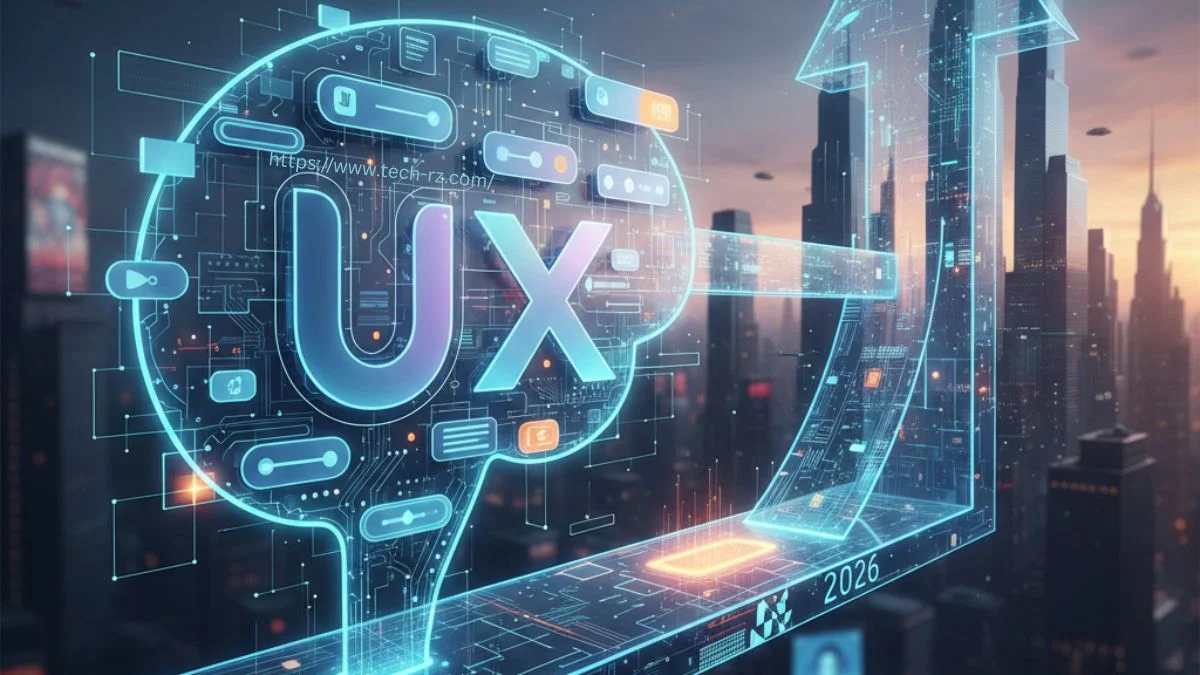
By 2026, having powerful features or advanced technology alone will no longer define software success. The real differentiator between a successful product and one that fails is how users experience it. Today, businesses are operating in an environment where users are flooded with options for software, and it takes just a few clicks to switch from one platform to another. What's more, UI and UX design have become fundamental axes of software development that cannot be dispensed with, even if justification is only leftover time. Here at RZ Technologies, we argue that design should not be limited to the appearance but more to how cutting-edge, simple, and efficient the business-driven experiences are.
As technology keeps progressing at a dizzying rate, user expectations follow suit. They want all their software to be pretty fast, highly simple, readily accessible, and fun enough to use on any device. The most decorated backend system is not going to save a bafflingly complex user interface or user journey from abandonment, frustration, and loss of trust. UI/UX design is hence a decisive factor in the success of any software, even beyond 2026.
User Interface or UI design pertains to setting up the visual and interactive facets of a software product. For instance, the layout, colors, typography, buttons, icons, and overall visual consistency fall within the scope of UI. In broad strokes, UI design is about the nature of the product's appearance and the client's surface-level interactions. On the contrary, User Experience or UX design concentrates on the total user experience through the software. He comprehends efficient usage, easy navigation, permeability, performance recognition, and even the psychological reaction.
Nowadays, UI and UX not only coexist but also (ex)symbiotically thrive in modern software development. Think about the attractive, eye-catching interface without an adequate and seamless experience for a moment, since it will be hard for the software to keep its users. Similarly, a structured experience with bad luck due to poor visual design might not be able to establish trust and credibility. We are now at the point where software that hits the mark does so by naturally incorporating both UI and UX to present the users with getting what they want effortlessly, without the feeling of having to struggle for it. At RZ Technologies, we perceive UI/UX design as a strategic endeavor that seeks to harmonize user satisfaction with business objectives.
The digital ecosystem in 2026 will be packed, though not barren. Every day, new apps, platforms, and tools/businesses are getting introduced, and the users thus have endless alternatives. All this has completely transferred the power to the users. If the software is complicated or unintuitive, people are not going to waste a moment leaving and finding a substitute. UI/UX design has become a user's first impression and sometimes the deciding factor whether they will stay or leave, even before the content of the software is considered.
The second biggest reason why UI/UX design cannot be taken for granted even in 2026 is that people will continue to use faster and better technology, from multiple kinds of devices. They are ’demands’ that the user continues to require without them requiring permission or consenting: an uninterrupted transition, the exact mirror image of the same software, be it on PCs, tablets, or mobile devices. The user will only ask for the first time to begin a task or activity on one device, and then with only a single click, it is that he can continue it seamlessly on another device. Setting up such a purposeful level of consistency and convenience means good UX implementation and flexible UI design. If the software does not meet these expectations, it will slowly fade away in an increasingly interconnected global village.
User retention is a major metric to determine the success of software, in which UI/UX design is directly correlated to user retention. When users come across the software as being easy-to-use and enjoyable, they tend to return, use more, and also refer it to other people. On the other hand, if users get lost in navigation, experience slow interactions, or see too many things in the interfaces, it irritates and pushes users away.
Now in 2026, users want software that can figure out their needs beforehand. Clever UX design utilizes behavior data, personalization, and intuitive workflows to take users' hands and help them finish their goals pretty much without any effort. At RZ Technologies, we come up with ideas of the journeys that bring down the user's thinking power too much, get rid of the unnecessary steps, and even create a flow feeling. Such a way not only improves the level of content but also increases the faithfulness for a long time.
UI/UX design has evolved from being merely a design-related issue to becoming a core business strategy. Great software that is expertly designed has a direct positive effect on conversion rates, customer satisfaction, and, thereby, the growth of revenue. Whether it's an eCommerce platform, SaaS application, or an enterprise system, an intuitive design allows users to complete their actions faster and with fewer errors.
Come 2026, corporate entities will be constantly checking out the returns via the investments made in UI/UX designs. Researches show over and over that organizations, which pour their resources into user experience, do better than their opponents. RZ Technologies is your hands-on partner in turning business design into an engine of growth by giving priority to the alignment of UX decisions and business goals. For sure, a maturation in user experience is giving rise to a monthly trend of 15 - 20 percent in the growth of revenues.
As the software has become an integral part of day-to-day life, trustworthiness is a feature that many, if not most, software users expect. This is even more so when the software is from a sector that handles sensitive information such as finance, healthcare, or enterprise management. The signal of reliability and competence for a user is a clean, professional, and consistent interface. If a software shows mistakes for some time, it becomes a demo, and then it is hard to get the user's trust.
With security and privacy central to the customers' concerns of the day, there are ways UI/UX design can be used to make such concepts apparent and tangible. Users naturally want to know and control what goes on with their data. Clear messaging, straightforward permissions, and efficient feedback systems all contribute to meeting such psychological needs. RZ Technologies develops user-friendly interfaces that not only enhance the comfort level but also, with lesser efforts, allow users to feel safe in their interactions with the software applications.
Accessibility is not just fundamental but also comprehensive.
In 2026, inclusive design is a must if you want to reach more people and stay compliant with the worldwide accessibility guidelines. The software should be readily usable for humans of all kinds of abilities, including those who may have visual, auditory, or motor limitations.
UI/UX designers carry out accessibility by choosing the right color contrasts, typography that is legible, offering keyboard navigation and screen reader features, etc. Moreover, an inclusive design helps disabled persons and, at the same time, also enhances the general level of the user experience. At RZ Technologies, we consider accessibility as part of the DNA of our design work, from which point on, all our work is elevated to be not only usable but inclusive and ready for the future.
Artificial intelligence is ushering in new ways for users to interact with software in 2026. AI-assisted interfaces learn from user behavior, generate personalized content, and provide the user with smart recommendations. On the other hand, if a properly designed UX is missing, AI utilization features might end up feeling too much for the user or even make them confused.
Good UI/UX design helps make an AI work for the user rather than against the very reason for the existence of such an AI, namely, the user itself. Some examples of such design assistances that work include visual clues, elucidations as to the functioning of things, and controls that allow the user to be able to manage things in a way that he/she find comfortable. RZ Technologies works on the development of AI-embedded user interfaces that are human-centered and make the users quite comfortable and satisfied.
Mobile usage will likely continue to dominate the online world, so mobile-first design has become a must. People want websites and apps that are fast to load, responsive, and easy to use on a touch screen. A lot of the time, the user's perception of performance is almost on the level of their experience, as no one likes running into slow or lagging software that makes them get frustrated and leave.
Apart from UI/UX design, performance perception is also optimized via smooth animations, clear feedback, and efficient layouts. If software is designed well, even if it's complicated, it can give users a sense of being fast and responsive. At RZ Technologies, we always put our performance-focused design at the top of our priority list so that users will have a seamless experience no matter what device they are using.
It might be surprising to some, but one of the great perks of investing in a good UI/UX design is that your customer support costs will go down. When a software application is straightforward, users don't ask for as much help in the form of support tickets, tutorials, or instructions. Users can get away with doing things themselves when navigation is clear, error messages are helpful, and the flow of work is guided.
2026 comes with a trend where companies are using UX changes more and more to cut down on how much money they spend on running costs. RZ Technologies keeps on working with its customers to come up with interfaces that are so easy to use without a manual that people are not only less confused but also less dependent on support, which in turn frees up staff to concentrate on activities that actually add value.
Enterprise and SaaS software, in general, appear to be difficult, mainly due to having lots of features. Enterprises in 2026 want their enterprise tools to be not only powerful but also user-friendly. UI/UX design makes it easier for people to understand complex systems by first arranging the information in a logical manner and secondly by putting the users' needs first.
RZ Technologies is committed to helping clients design and develop enterprise software that not only has all the bells and whistles but is also user-friendly. Through role-based experiences and intuitive dashboards, we turn enterprise software into productivity tools for teams of all sizes.
Some of the trends, such as voice interfaces, gesture-based interactions, immersive experiences, and micro-interactions, among others, are influencers of UI/UX design in 2026. These features are intended to increase the level of engagement, albeit they must be used in moderation so as not to overload the user.
Anyway, design trends are no longer just about what the product looks like on the surface but more about how it makes the user feel and how they interact with it. RZ Technologies is one step ahead of the game by always keeping an eye on the users' habits and changing the design accordingly so as to give them a fresh and exciting experience.
At RZ Technologies, UI/UX design is embedded in our beliefs and culture in the way we develop software. We are convinced that a good software product is always the result of a deep understanding of the user, together with a value-creation journey that ends with the user. Our design method is a combination of research, strategy, creativity, and testing for usability, and thus, we can guarantee that every product is not only good but great.
We liaise with our clients and listen to them very carefully so that the design aspects are in line with their business objectives, which means that the software is not only a good fit in terms of looks but also performance. That is why it is clear that companies will still be coming to RZ Technologies in 2026 to leverage user-centric designs that boost engagement, retention, and growth.
In 2026, designing your UI/UX properly will definitely become a standard, and any software that has failed to do so will most probably be considered a failure, too. The design aspects of a product affect users' happiness and loyalty as well as the business's growth and reputation. A company that chooses to disregard UI/UX is basically deciding to be a losing player in this hyper-competitive market.
RZ Technologies knows that creating great software has a lot to do with technology and human experience. Being able to design the best user interface has become even more important now since the world is getting more and more digitized. Whenever the road ahead is looking unclear, and the digital features of the customer experience continue to evolve, investing in UI/UX design is not only a design decision but a strategic move that can lead to long-term success.
UI/UX design is significant in 2026 due to the fact that end users require software which ability to be very intuitive, quick, and easy to work with. The great interface of the software not only makes the person who is using it happier, but it also helps him or her to get used to the product, and is a direct way to increase the growth of the business.
User retention can be influenced positively by UI/UX design through the provision of an easy software journey and giving pleasure in use. If the process of finishing the task is clear and without a runaround or newness, the user will come back to he product and continue using it in the long term.
The major difference is that the UI designer works on the design and the graphics of the application or the product i.e. the arrangement of the components on the screen, the color schemes, the choice and size of the font, and the types of the buttons, while the UX developer is responsible for the whole user journey, how user friendly is the product, and the overall user's feelings after using the product. Both parties have to cooperate to get good results from the software product.
Good UI/UX design can definitely be a key factor in the increase of business revenues by raising the rate of conversions, lowering the number of customers who leave the website without making purchases, and gaining the trust of customers. If the overall experience is smooth, the users are more willing to do actions such as sign up or purchase without hesitation.
By developing user-friendly UI/UX, the result is a reduction in the number of customers who get lost, and therefore, customer service at help desks is less requested. By means of easy navigation, user feedback, and well-structured workflows, users are enabled to solve their problems by themselves.
Mobile-first is indispensable for UI/UX design since the major portion of users are utilizing mobile devices to get access to various software. Being in a position to operate maximally in a mobile environment would guarantee one not just better speed and greater convenience but also provide the same experience to one who is working on larger screens.
On the one hand, AI can change the way of thinking about UI/UX design by its capabilities to provoke the individualization of the software and predict one's behavior and action, and hence, its being smartly automated. The good UX design leverages AI functions so that they are easy to understand and that the user feels pleasant with them, and not that they get complicated.
Accessibility lets people with different kinds of capabilities use the software. By 2026, the accessible UI/UX design will be the most important one for the consideration of a total of people; apart from that, it has a great influence on the performance of the software, as well as it is an indispensable factor for compliance.
Enterprises should invest in professional UI/UX design to improve productivity, user adoption, and system efficiency. Well-designed enterprise software simplifies complex workflows and enhances employee performance.
RZ Technologies performs a fusion of the customer-centric research, the design of the present time, and the business-oriented strategy to present the UI/UX solutions that will substantially increase the number of users' engagement, their loyalty, and the work output and growth that can be measured in 2026, as well as later on.