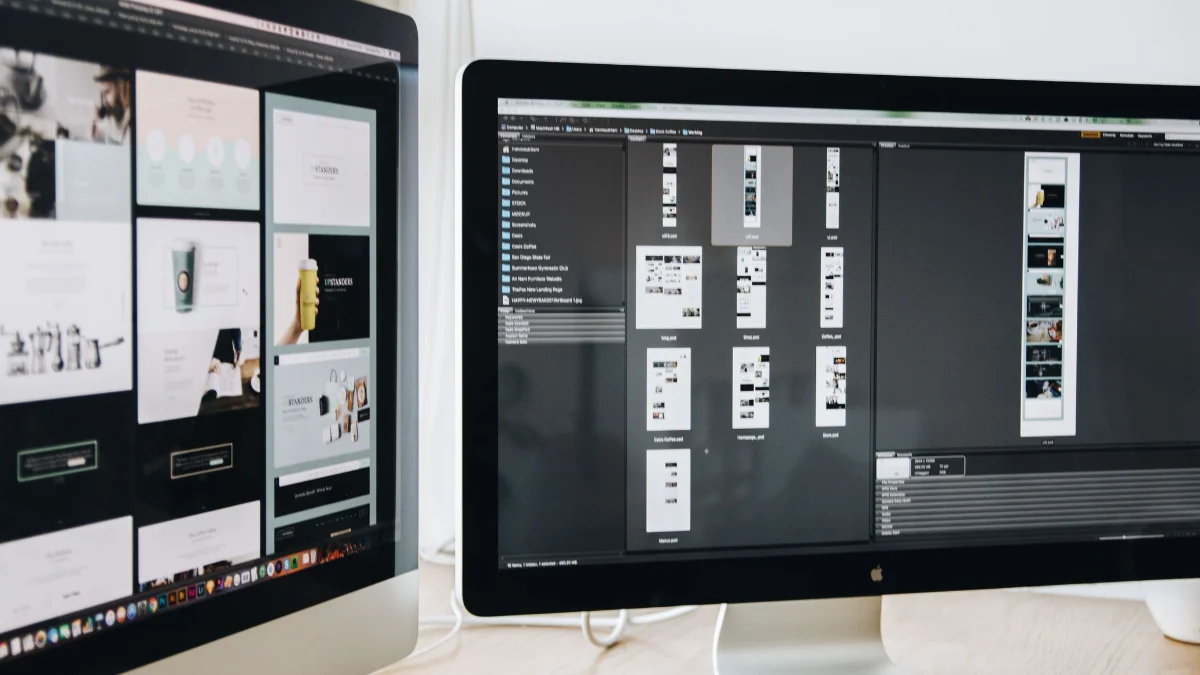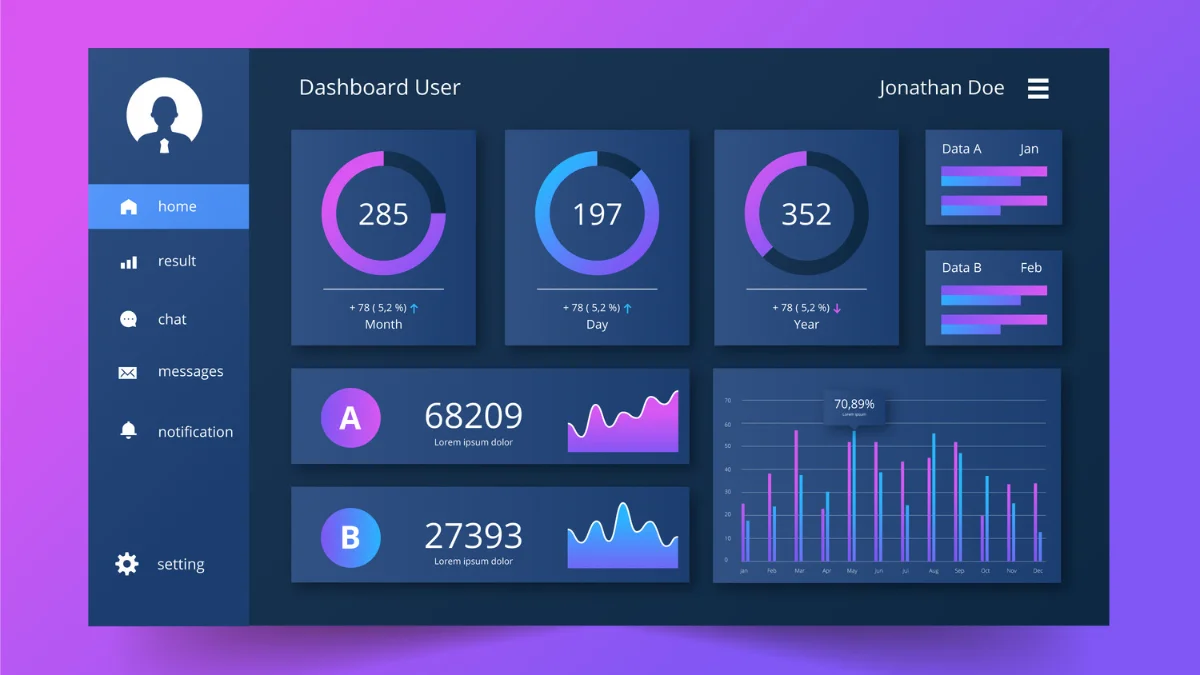
What started as a niche design preference has now become one of the most influential trends in modern digital experiences -dark mode, literally, has been "in the dark" for most of the time of its existence and suddenly burst as a brilliant shining trend. More and more websites, mobile apps, software platforms, and operating systems in general are turning to dark interfaces as standard rather than optional features over the last decade. The discussions on UI and UX in 2026 will still revolve around dark mode, showing that the popularity of this mode is not a mere passing phenomenon.
This extensive acceptance of dark mode is reflected in the major platforms such as social media networks, productivity applications, streaming services, development tools, and e-commerce websites. It is no longer a surprise for users to find websites and applications offering a dark theme side by side with the traditional light interface. Initially a matter of visual taste, it is now a vital element of user experience, accessibility, branding, and engagement.
To a large extent, dark mode's success is tied to a change in the way people see things. Users' values change. Alongside this, technology makes it possible to produce fresher, better, more efficient displays, and at last, there is a growing realization on our part as a culture that the way we construct interfaces carries a big punch in how people behave around those interfaces. The companies running the show are always willing to see the side of the users, and if they create good dark mode experiences, they get the results in satisfaction scores, longer session durations, and stronger brand perception.
With this guide, we intend to give a detailed account of why dark mode is still a hit in 2026, offer a side by side comparison of dark mode and light mode, discover the mind of a dark-mode user, raise accessibility matters, point to the latest trends and give pragmatic tips for effectively designing dark mode experiences that are simple, clear, and most of all, user-friendly.
It all started with dark interfaces. The early days of computer systems were dominated by white characters appearing on black backgrounds, mostly due to the restrictions of that time. With the sudden popularity of graphical user interfaces, designers flipped the switch towards the use of light backgrounds, mostly because of the main association with printed paper, and generally better readability under different lighting.
And for a pretty long time, light interfaces were the norm on the web. But the smartphone revolution, OLED displays, and the latest UX research brought dark themes back on the map. Companies found that technology was keeping people glued to screens longer, and so they explored different ways that may have made the experience more comfortable and personalized at the same time.
Dark mode is generally listed as one of the must-have features of operating systems, browsers, and applications by the early 2020s. Needless to say, the situation in 2026 is drastically different. No one sees it as an optional luxury anymore. It is rather perceived as a fundamental part of a modern user experience design.
What dark mode stands for is even more than a trend breaking out into a fashion fad of sorts. It certainly responds to the deeply rooted and constantly evolving needs of users, not only on the emotional side but also functionality-wise. It exudes elegance visually while taking into account very practical issues, for example, eye comfort, enhanced focus, and personalization.
The driving reason why dark mode is still going strong owes much to the lifestyle of contemporary users. They jump from one device, one app, one website to another all the time. And of course, they want to have an enjoyable time during this whole process, gaining comfort, control over settings, and visual pleasure.
Many users also get the impression that dark mode generates quite a bit of glamor and stays in vogue. As a matter of fact, it is quite typical that a number of luxury brands' products are linked to dark mode as this kind of interface is allowing to communicate the brand image of not only a degree of high class but also that of an innovator. The work done by design teams in making the naturally dark backgrounds produce yet more punch colors, whether it is the finding of a just-right contrast or coming up with completely new shades, is often responsible for an immersive experience that makes light no less than secondary.
Dark mode also draws users with a key feature: control. It is becoming the norm for people to expect their digital products to work according to their preferences rather than being limited to one visual look. Giving users the option of dark mode is a way of handing them the choice of the interface that best fits their environment and level of comfort.
As digital experiences get more tailored, dark mode is still a great solution to boost customer satisfaction and increase user loyalty.
Simply switching a white backdrop for a black one is not enough to create a compelling dark mode experience. Besides, dark mode operation is a great way to demonstrate color harmony, ensure readability, consider accessibility, set a visual hierarchy, and analyze user interaction.
These days, dark mode design is about finding a balance and not making the interface as dark as possible. Very dark backgrounds can make the contrast too strong, causing discomfort and visual fatigue. Instead, many designers choose dark gray colors that, while being less readable, carry a certain depth.
It is especially important to give some thought to the typography when dealing with dark UI. The text must be sufficiently readable without making the contrast too strong. A well-considered combination of font choice, font size, and color changes can produce a pleasant reading atmosphere across various gadgets.
One should also look at the visual hierarchy from a different angle. What works well in light mode may be totally reversed in dark mode. Designers have to double-check that buttons, navigation menus, forms, and calls-to-action are not only distinctive but also convenient for users to achieve their goals.
Proper dark mode design is a process of carefully weighing the benefits to the users against the visual beauty factor, step by step.
The conversation regarding dark mode versus light mode will be around in 2026 as well, but still, nobody has come up with the ideal, universal choice. The best option hinges on the user's situation, the kind of content, and personal preferences.
Light mode continues to be a very good choice for large volumes of textual content. It is similar to printed material, where dark text on a light background often facilitates reading speeds in well-lit environments.
Conversely, dark mode is very suitable for extended periods of time spent by users in front of screens, especially when the surrounding light is weak. It fosters a concentration-enhancing atmosphere by diminishing visual disturbances and bringing attention to the main points.
In terms of creative apps, entertainment sites, dashboards, and developers' tools, it is precisely dark mode that can let users get an excellent, immersive experience. The shadowy setting makes available content, pictures, and UI components visually prominent in a more effective way.
Instead of having to pick only one, nowadays the most successful companies understand how important it is to give users the choice of both modes. Essentially, it is through flexibility and personalization that the great user experience happens.
The reasoning behind dark mode's winning streak lies, to a great extent, in human psychology. Being able to control colors makes it possible to evoke certain emotions and change what's in our mind about a thing, behavior included. So, interface design is a fantastic tool to alter a user's experience.
Nighttime is a time of rest, renewal. That considers the idea that such a setting might also be seen as a metaphor for comfort, prestige, elegance, and professionalism. The use of black panels is a typical branding strategy for luxury due to the uniqueness that it conveys.
Dark mode is said to be great for concentration, too. Reducing visual clutter and minimizing the "attack" of bright content makes it easier for the user of the software to focus on the content and tasks. Fortunately, this effect from the BPM (blue, purple, mauve) is quite different from the "fan boy" type of scenario in productivity and professional software.
Another psychological aspect is emotional comfort. Quite a few users feel that dark mode is a soothing and less intense experience than bright interfaces. As screen time seems to increase continuously, the human inclination is to choose more relaxing experiences.
The attractiveness of dark mode on a psychological level not only meets the user's functional needs but also plays a key role in the user's preference for dark mode.
The key to making a user-friendly dark mode interface is knowing what users really want instead of blindly chasing styles. The challenge for designers is making every part of the interface understandable, legible, and aesthetically pleasing.
First, skip solid black backgrounds. Black surfaces can sometimes provoke very strong lights and darks, and it is hard to make the interface components stand out. Most hi-tech dark themes rely on a dark charcoal or deep gray color, which lifts the depth perception. Choosing colors is the next important factor.
Strong accent colors can look a bit too much when put against dark backdrops. The choice of colors should maintain the balance of colors and contrast at the same time.
The typography and spacing matter a lot. Ample spacing plays a big role in a non-cluttered appearance, and font weights have an impact on the level of legibility. Brightest possible text is not the answer.
Buttons, links, and navigational components are examples of UI components that must stay evident and reachable at all times.
Users should not be in a position of guessing what possible actions exist in the interface.
Such a dark mode that is really convenient for the user integrates a new level of aesthetic appeal with the correctness of the functions, ensuring that attractiveness does not negatively affect the characteristics of usage.
Engagement and retention are two important performance indicators for any website nowadays, and dark mode is a good way to affect and enhance both of them.
Extended content exploration is a logical consequence of users' feeling at home level of a website interface. Dark mode may set the right mood for long, enjoyable browsing hours, especially during the night.
Giving a user the power to tailor the interface to their liking is a meaningful contribution of personalization to engagement. Besides, dark mode can be a sign that the company is thinking of its users' individual tastes and preferences, thus reinforcing the emotional bonds between the user and the brand.
The bigger the pleasures a user derives from their association with a platform, the stronger the retention will be. Minor winnings in the level of comfort and satisfaction may stack up over time, leading users to be more probable that they would come back regularly.
Dark mode cannot be regarded as a single factor leading to the success of engaging a user, but, normally, it is a part of a more extensive UX plan targeted at increasing user satisfaction and loyalty.
Accessibility is still one of the major issues in present web design. The dark mode design must be very thought-out to be able to accommodate even users with disabilities.
High contrast is one of the most necessary things. It must be possible to separate text and interface elements from their background without causing visual discomfort. Accessibility guidelines mean that it has to be solved with the correct contrast ratio.
It is not a good practice to just use colors to give information. Color gives, and color deficiencies are human characteristics that, for some, can become quite problematic in understanding color-reliant interfaces.
Typography needs to be sharp and legible, and allow for changes in device restrictions. Small fonts on poorly designed dark interfaces can be very difficult to read.
Testing also plays a very important role when it comes to accessibility. Designers need to check how dark mode works with actual users and accessibility tools to uncover potential issues before rolling it out.
Ideally, a well-thought-out dark mode should work to make a platform more usable rather than excluding certain groups of users.
Dark mode design is not standing still, and there are quite a few trends that are influencing how users will experience digital content in 2026.
Here is just one of the major trends in layer surfaces. Instead of using flat backgrounds, designers play with the depth of the interface by using very slight shades of dark colors. The result is that the visual hierarchy is conveyed much more clearly, and the quality of the interface is improved.
Adaptive themes are yet another trend. Nowadays, when searching for colors, whole systems consider external factors as well as user preferences and device settings, then make an automatic change.
Another popular choice among designers lately for dark mode UIs, aside from glassmorphism, includes using semi-transparent elements with faint blur effects for creating chic and futuristic environments.
Within dark environments, micro-interactions have not only become quite sophisticated but also act as a pleasant surprise. Alongside adding charm to digital products, the help given to users in comprehending interface operations through smooth animation and responsive feedback is undeniable.
Having AI assist in personalization is also becoming quite a trend. Just imagine a system that can find out a user's preferences and then set the dark mode settings automatically so as to meet the individual's requirements.
By increasing the number of such scenarios, it is clear that dark mode is a mode that is still very much alive and kicking.
In spite of the large number of people who use dark mode, it will not work if it is done incorrectly. Regrettably, many sites present a dark theme without really going into the details of how each challenge associated with this new design should be addressed.
For example, one of the most common blunders is using pure black backgrounds combined with bright white text. The issue here is that although things may look very dramatic, that kind of contrast, on the other hand, can be very harsh and uncomfortable for reading.
It is in the same relation that neglecting visual hierarchy is another error. Very often, when all components have the same color and brightness level, users cannot differentiate between what is less important and what is more important.
Poor color adaptation goes hand in hand with making trouble as well. Apart from a few exceptions, those colors that work great for the light modes become either too intense or difficult to interpret when in the dark mode environment.
Not all app designers think about image optimization, though only photographs, illustrations, and icons get inconsistent when put against a dark background if they have not been properly adjusted beforehand.
Finally, the lack of sufficient accessibility testing is still a very common problem. A dark interface can be appealing to the eye, but actually it might give rise to many usability problems to a large number of users.
Not falling into these pitfalls needs a decent amount of preparation, testing, and ongoing renovation.
Dark mode is set to have a very positive future. With technology becoming more individually tailored, users will increasingly want their interfaces to be able to respond to their needs and surroundings intelligently.
Quite possibly, artificial intelligence will be the main aspect of this, enabling several customization options like changing colors, contrast levels, and brightness corresponding to user behavior and environmental conditions.
In view of the fact that there will be such a variety of devices, it becomes very clear that what users want more than anything is the same experiences across their phones, tablets, laptops, wearables, etc. Dark mode would definitely need to be the same across all of these to be considered a successful one.
The development of display technology can also change the game when it comes to dark mode strategies. A new generation of displays providing the possibility of accurate colors and better contrast will, no doubt, serve as fertile ground for the visualization of the more complex and sophisticated experiences.
Ultimately, dark mode will be more than a simple matter of visual preference. It will become one of the main ingredients of responsive and smart user interfaces.
Dark mode continues to be a hit in 2026 because it rightly mixes how it looks and works together with psychology and a touch of personal style. On top of giving the users a fresh and visually attractive option to the usual light screens, it also helps in comfort, concentration, and standout brands.
The best use of dark mode is visually nice enough to attract people’s eyes. Usability, accessibility, readability, and the satisfaction of the user are put first. If you, as an organization, go for the thoughtful dark mode experiences, you can have closer contact with your audiences, and at the same time, you can keep up with the changing design expectations.
Digital products change and grow all the time. Dark mode will be a prominent part of the UI and UX strategy that has to be. Designers who know dark mode's principles, challenges, and possibilities will be the ones who can create the users' experiences that not only meet but also exceed the expectations of modern users and provide them with great and lasting value.
Dark mode is not a fad anymore. It is a crucial part of current digital design, and its impact will be and is still shaping the future of user experience for a very long time to come.
Dark mode is still in demand because it is fresh-looking, allows for personal style, helps you know when and how to focus, and makes a very attractive visual experience that can work across different websites, apps, and platforms.
Light mode is more preferable for reading when one is exposed to natural light, and dark mode works in a very dark environment or for a very immersive application, such as a game, for example. So, neither one is necessarily better.
Great design of the dark mode can lead to greater enjoyment of the website, higher user time on the website, and more time users spend interacting with the website content.
Among the best practices are the use of dark gray for the background instead of black, maintaining the appropriate contrast ratio, ensuring that the text is readable, and lastly creating a clear visual hierarchy.
When dark mode is designed with lots of care and smart choices, such as the use of excellent contrast, readable fonts, and support for those with both visual and color deficiencies combined, then the result will be an improved mode of accessibility.
The usual colors that perform well in dark mode and at the same time, do not cause too much visual strain are generally muted accent colors, soft whites, light grays, and a few brand colors.
Despite the fact that it works more or less depending on variable factors such as conditions of lighting, nature of content, and individual preferences, many users already find dark mode quite nice and less straining to their eyes during the use of a computer in a quite dim environment.
Among the common mistakes are using pure black as the background color, low contrast levels, text that is difficult to read, color inconsistencies, and not testing the site for the wishing of the accessibility requirements.
By giving both options, you, in a way, provide your users with the ability to completely personalize their experience according to their own preferences, surrounding conditions, and accessibility needs.
Several of the most important trends are those that include adaptive themes, dark surfaces that are layered, glassmorphism effects, AI-driven personalization, high-level accessibility features, and, additionally, newer and better micro-interactions.